








Unmanned Systems

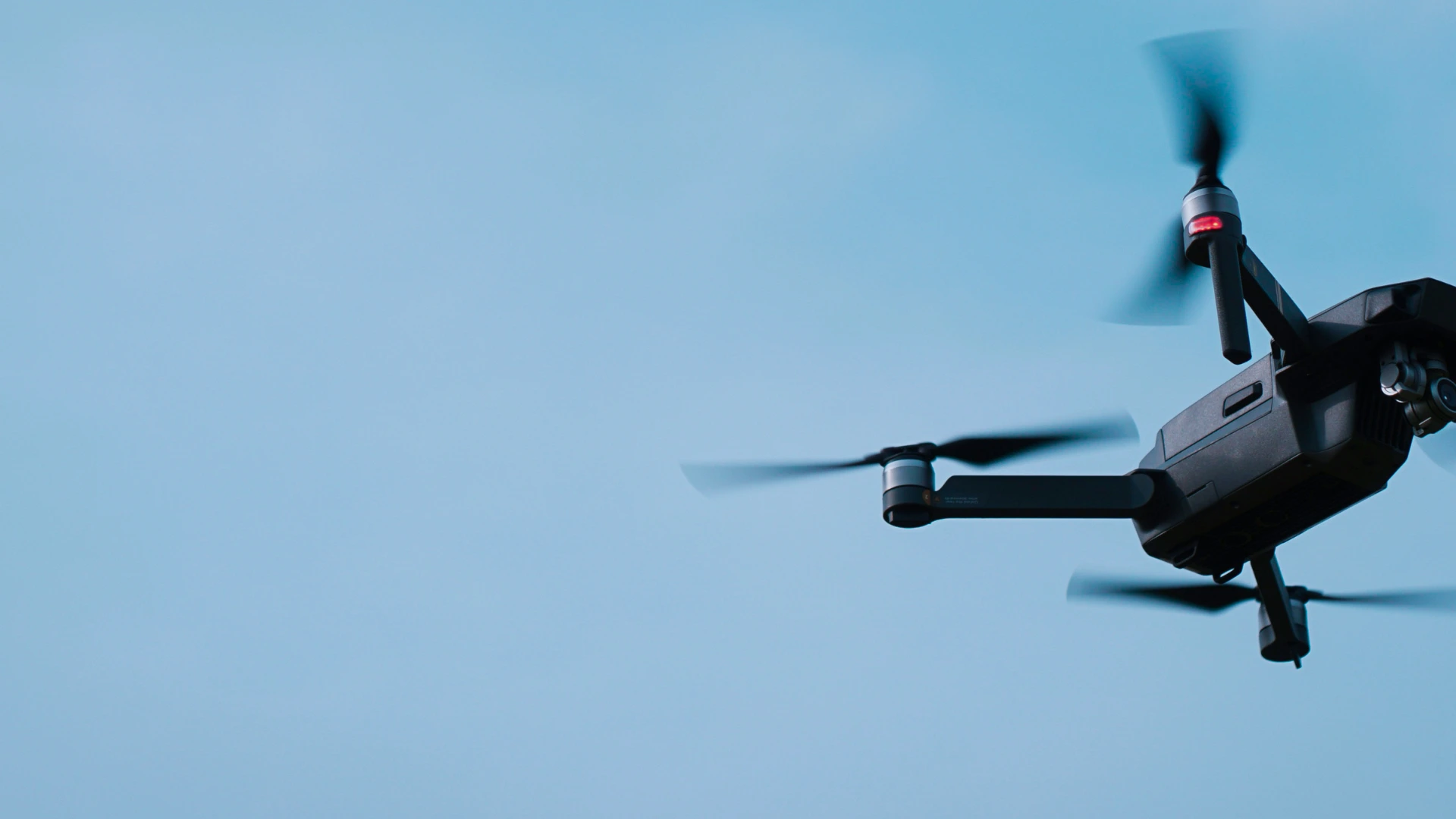

When autonomy only reveals its true value in the field
Unmanned systems are increasingly shaping the operational landscape, whether in the air, at sea or on land. However, their potential can only be fully realised when technology, usability and operational context are brought together. This is precisely where our focus lies: designing systems that are integrable, controllable and reliable.
Why hardware alone isn’t enough
Unmanned systems are never stand-alone products. They form part of interconnected system environments and are characterised by sensors, data flows, communication architectures and people who have to make decisions in time-critical situations.
Our experience shows that autonomy is only an advantage if it reduces the burden on people and improves situational awareness.
Case Study 1: Human-Machine Interaction for Autonomous Drone Units
This project focused on the question of how autonomous drones can be used tactically without introducing additional complexity.
Our focus was on:
- a clear, consistent system architecture,
- an intuitive human-machine interface for multiple operators,
- reducing the cognitive load whilst simultaneously increasing mission capability.
The result: More people can efficiently control drone units, analyse data and make decisions. Autonomy becomes an advantage rather than a hindrance.
Case Study 2: Swarm-Capable Systems and Multi-Agent Co-operation
In another project, the focus was on the coordination of multiple autonomous unmanned aerial vehicles. The challenge was to develop systems that do not simply fly alongside one another, but operate together.
We worked on:
- coordination logic for multi-agent systems,
- simulation-based behavioural models,
- interfaces that enable a shared situational awareness.
The result is a system that performs complex reconnaissance and support tasks more efficiently. Not through ‘a single drone’, but through orchestrated cooperation.
The future of unmanned systems: Three trends shaping the coming years
The further development of unmanned systems will be determined less by individual platforms and more by their operational capability in real-world environments.
Three trends are particularly relevant:
1) Deployment in highly complex, structured environments
Autonomous systems must function reliably in densely populated, dynamic scenarios – with obstacles, changing conditions and limited communication windows.
2) Human–machine collaboration remains central
Autonomy does not replace decisions. It supports them. Humans remain part of the system – technology creates transparency, room for action and relief.
3) More AI for decision-making – towards fully autonomous units
The integration of AI is shifting the focus from pure automation towards real decision-making capabilities. The goal is robotic, autonomous units that can act based on context.
Our approach
We combine systems engineering, modelling and simulation, hardware platform design and user-centred design to make autonomous systems operational, reliable and scalable.
Autonomy is not an end in itself. It is a tool - and its value is determined by how it is used.
